
Last updated: July 11, 2026
Quick Answer: What Is the 21st Century ROAD to Housing Act?
The 21st Century ROAD to Housing Act is a broad federal housing law intended to increase housing supply, reduce certain development barriers, improve access to some mortgage programs, modernize manufactured and modular housing rules, strengthen appraisal-review procedures, improve veteran loan disclosures and reform federal disaster-recovery programs.
It could help communities expand housing options over time, but it does not immediately reduce mortgage rates, override local zoning, lower property-insurance premiums or guarantee that home prices will fall. Many parts of the law require additional federal implementation, rulemaking, pilot programs, grants or appropriations.
The 21st Century ROAD to Housing Act is now federal law after months of negotiations and unusually broad bipartisan support in Congress.
The final legislation passed the Senate on June 22, 2026, and the House on June 23, 2026. It became law on July 11, 2026. The National Association of REALTORS® said the milestone followed 21 months of continuous REALTOR® advocacy focused on housing supply, affordability and homeownership.
The law is important, but buyers and sellers should separate its long-term goals from what changes immediately.
It does not suddenly make every home affordable. It does not force mortgage rates down. It does not eliminate Panama City Beach or Walton County zoning rules, condominium restrictions, insurance concerns, flood-zone issues or short-term rental regulations.
What it does is create or reform a wide range of federal programs that could affect housing construction, financing, appraisals, veterans, manufactured housing, disaster recovery and institutional ownership over the coming years.
You can review the official enrolled bill through GovInfo and the Senate’s section-by-section explanation .
ROAD to Housing Act Quick Summary
- Creates and reforms programs intended to increase housing construction and supply.
- Directs HUD to develop best-practice guidance for zoning and land-use policies.
- Allows a pilot program for FHA mortgages with original balances of $100,000 or less.
- Updates manufactured and modular housing standards and financing programs.
- Requires procedures for borrowers to request reconsideration of certain appraisals.
- Improves VA-loan awareness and comparison information for qualifying veterans.
- Reforms federal long-term disaster-recovery programs.
- Restricts certain purchases by institutional investors controlling at least 350 single-family homes.
- Does not force large investors to sell homes purchased before enactment.
- Does not immediately change mortgage rates, insurance costs, local zoning or HOA rules.
Why This Housing Law Matters
Housing affordability is not controlled by one factor. The price of a home is affected by land, construction costs, labor, financing, interest rates, permitting, zoning, infrastructure, insurance, taxes and the number of homes available.
The ROAD to Housing Act attempts to address several of those pressure points at the federal level instead of relying on one national housing program.
The law contains provisions involving:
- Housing counseling and financial education
- Infill development and environmental reviews
- Local and regional housing planning
- Affordable housing construction
- Whole-home repair programs
- Vacant-building conversions
- Manufactured and modular housing
- Small-dollar mortgages
- FHA multifamily loan limits
- Veteran housing and loan disclosures
- Appraisal reconsideration procedures
- Disaster recovery and resiliency
- Community banks and rural lending
- Large institutional ownership of single-family homes
That broad scope is why the law is receiving attention from homebuilders, lenders, local governments, housing organizations, real estate professionals and consumer advocates.
How the Law Attempts to Increase Housing Supply
One of the law’s central goals is to help more housing move from planning to construction.
The legislation directs the U.S. Department of Housing and Urban Development to develop best-practice frameworks for zoning and land-use policies. It also authorizes planning grants, infrastructure assistance, preapproved housing-design programs and other tools intended to help participating communities build housing more efficiently.
Additional provisions address environmental reviews for certain small, rural and infill projects. The intent is to reduce duplicated federal reviews and shorten unnecessary delays while maintaining applicable state and local requirements.
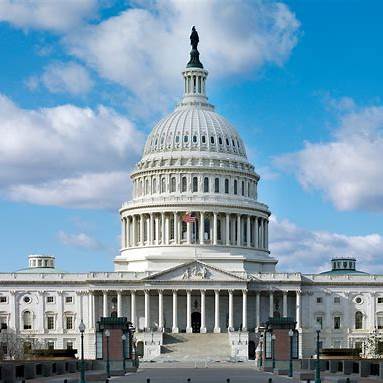
The ROAD to Housing Act includes measures intended to reduce certain barriers to new housing, but local zoning, permitting, infrastructure and construction costs will continue to affect development.
Important local point: The federal law does not automatically rezone land in Panama City Beach, Bay County or Walton County. Local comprehensive plans, zoning maps, building codes, density limits, height restrictions, setbacks, infrastructure requirements and development approvals still matter.
Property owners and developers can review current local requirements through the City of Panama City Beach Planning Division and Walton County Planning and Development Services .
What Could It Mean for Panama City Beach and 30A?
Panama City Beach and the 30A corridor are not ordinary housing markets. The area includes primary residences, workforce housing, second homes, luxury properties, beachfront condominiums, manufactured homes, vacation rentals and investment properties.
A federal housing program that works in a large inland city may have a different effect in a coastal market where insurance, flood risk, limited land, infrastructure, tourism, rental regulations and construction costs influence development.
The law could eventually provide useful tools for local governments, nonprofit organizations, developers, lenders and housing agencies. The actual local effect will depend on:
- Which programs receive federal funding
- How HUD and other agencies write the implementing rules
- Whether Bay County, Panama City Beach or Walton County applies for available programs
- Whether proposed projects comply with local zoning and comprehensive plans
- Land and infrastructure availability
- Construction, insurance and financing costs
- Community support and local approval processes
The most realistic expectation is gradual change, not an immediate surge of inexpensive homes.
Could the Law Help Buyers Seeking Smaller Mortgages?
The law allows HUD to establish an FHA pilot program for mortgages with an original principal balance of $100,000 or less.
Small-dollar mortgages can be difficult to obtain because many of the lender’s fixed origination, compliance, appraisal and title costs are similar whether the loan is $75,000 or $375,000. That can make smaller loans less attractive for some lenders.
The authorized pilot may include incentives for lenders, adjustments to certain FHA costs, assistance with down payments and closing costs, outreach to borrowers and technical assistance for participating lenders.
However, this is not an automatic new mortgage available at every bank today. HUD must decide whether to establish the pilot, publish its rules and identify how lenders and borrowers can participate.
In the Panama City Beach and Bay County area, this provision could be relevant to certain lower-priced manufactured homes, older homes, small properties and purchases involving land or homes outside the highest-priced coastal locations. Property eligibility, condition, title, land ownership and lender underwriting would still apply.
Manufactured and Modular Housing Changes
The law contains an entire title focused on manufactured and modular housing. It updates federal definitions, directs reviews of FHA financing barriers for modular construction and modernizes certain manufactured-housing loan programs.
It also authorizes programs intended to help preserve and improve qualifying manufactured-housing communities.
This may be meaningful in parts of Bay County where manufactured housing provides a lower-cost ownership option. Still, buyers should not assume every manufactured home will suddenly qualify for conventional, FHA or VA financing.
A lender may still need to review:
- Whether the home is classified as real or personal property
- Whether the buyer owns or leases the land
- The age and construction standard of the home
- Foundation and installation requirements
- Title retirement or conversion requirements
- Insurance availability
- Flood-zone information
- Appraisal support
- Community or park restrictions
The law may improve the framework, but every property and loan must still be reviewed individually.
New Appraisal Reconsideration Requirements
The Appraisal Modernization Act section requires federal housing agencies to maintain procedures allowing consumers to request a reconsideration of value or, when appropriate, a subsequent appraisal for certain federally backed mortgage transactions.
This could give qualifying borrowers a clearer process when they believe an appraisal contains factual errors, uses inappropriate comparable sales or misses relevant property information.
Buyers and sellers should understand the limits:
- A low appraisal is not automatically incorrect.
- A reconsideration request needs credible evidence.
- Better evidence may include corrected property facts, valid comparable sales, permits and documented improvements.
- The provision applies to covered federally backed transactions involving a consumer’s principal dwelling.
- A second home or short-term rental investment may not receive the same protection.
This distinction is especially important in Panama City Beach and 30A, where many purchases involve second homes, luxury homes, beachfront condos or vacation-rental investments rather than primary residences.
What Veterans and Military Buyers Should Know
The law includes provisions intended to make veterans more aware of their VA home-loan benefits.
One provision adds a military-service question to the uniform residential loan application process. Another requires qualifying FHA mortgage disclosures to provide cost-comparison information that can help veterans compare FHA financing with a possible VA loan.
That does not mean a VA loan is automatically the best choice in every transaction. Buyers should compare the interest rate, funding fee, down payment, property requirements, closing costs and lender terms.
Veterans, service members and qualifying surviving spouses can learn more through the official VA home-loan website .
This portion of the law may be particularly relevant to military and veteran households buying primary residences in Bay County.
Disaster Recovery and Coastal Housing
For a hurricane-exposed area such as Northwest Florida, the disaster-recovery provisions deserve attention.
The law establishes a HUD Office of Disaster Management and Resiliency and authorizes a more permanent framework for the Community Development Block Grant–Disaster Recovery program.
The legislation is intended to improve coordination among HUD, FEMA, the Small Business Administration and other agencies involved in long-term housing recovery.
Better coordination could help communities move from emergency response to permanent housing recovery more efficiently after a qualifying disaster. It does not eliminate the need for property owners to maintain appropriate insurance or prepare for hurricanes.
Coastal buyers should continue reviewing:
- Wind and homeowners insurance
- Flood-zone designation
- Flood-insurance options
- Elevation certificates
- Hurricane deductibles
- Roof age and construction
- Condo master insurance
- HOA reserves and special assessments
For a detailed local explanation, read my Panama City Beach and 30A Flood Zone Guide .
Does the Law Ban Real Estate Investors From Buying Homes?
No. The law does not prohibit ordinary individual investors, local property owners or most small real estate companies from purchasing homes.
The restriction applies to a defined large institutional investor that has direct or indirect investment control of at least 350 single-family homes, subject to the law’s definitions and exceptions.
Covered large investors are generally prohibited from making additional purchases of certain single-family homes. The law includes exceptions for specific transactions and does not require those investors to sell homes purchased before enactment.
For a typical buyer purchasing one vacation rental, second home or small portfolio property in Panama City Beach or along 30A, this section is unlikely to function as a direct prohibition.
Investors still need to evaluate local short-term rental rules, HOA restrictions, financing, insurance, flood exposure, management expenses, parking and realistic rental performance.
Does the Law Change Panama City Beach Condo Financing?
The law contains broader mortgage, appraisal and FHA reforms, but it does not remove the project-level review required for many condominium loans.
A Panama City Beach condo may still face financing questions involving:
- Association reserves
- Master insurance
- Special assessments
- Pending litigation
- Building condition
- Commercial or hotel-style operations
- Short-term rental activity
- Single-entity ownership
- Milestone inspections and reserve studies
Buyers should review my guide to warrantable and non-warrantable Panama City Beach condos and my explanation of milestone inspections and Structural Integrity Reserve Studies .
What the ROAD to Housing Act Does Not Do
It Does Not Set Mortgage Rates
Mortgage rates respond to broader financial markets, inflation expectations, bond yields, lender pricing and borrower qualifications.
It Does Not Override Local Zoning
Local land-use, density, height, setback, permitting and development rules remain important.
It Does Not Lower Insurance
Wind, homeowners, flood and condominium insurance costs remain property-specific and market-dependent.
It Does Not Cancel HOA Rules
Condominium declarations, HOA restrictions, assessments and rental rules remain enforceable unless properly changed.
It Does Not Guarantee Lower Prices
Additional supply could improve affordability over time, but local prices depend on inventory, demand, location and property condition.
It Does Not Take Effect All at Once
Many sections require agency rules, studies, pilot programs, deadlines, applications or future funding.
What Panama City Beach and 30A Buyers Should Do Now
- Do not delay a sound purchase solely because of the new law. Most provisions will not change local inventory or financing overnight.
- Get a current loan preapproval. Ask the lender which conventional, FHA, VA, USDA, manufactured-home or portfolio programs fit the property.
- Ask about appraisal-review procedures. Determine whether the transaction qualifies for a reconsideration-of-value process.
- Review the complete ownership cost. Include insurance, HOA fees, special assessments, taxes, maintenance and rental-management expenses.
- Verify local restrictions. Federal housing legislation does not replace city, county, HOA or condominium rules.
- Complete property-specific due diligence. Flood zones, building condition, financing and insurance can vary considerably between properties.
Start your search through my Panama City Beach and 30A home search , explore Panama City Beach real estate or compare communities through my 30A East real estate guide .
What Sellers and Property Owners Should Watch
Sellers should not automatically raise or lower their price because a federal housing bill became law.
Pricing should still be based on current comparable sales, active competition, property condition, financing availability and buyer demand.
Sellers can prepare by organizing:
- Surveys and elevation certificates
- Insurance information
- Permits and improvement records
- HOA or condominium documents
- Reserve studies and inspection reports
- Special assessment information
- Rental history and restrictions
- Manufactured-home title or foundation records, when applicable
- Accurate details that may assist an appraiser
Read my guide on selling property in Panama City Beach or along 30A or request a local property-value review .
Frequently Asked Questions
Is the 21st Century ROAD to Housing Act officially law?
Yes. The final legislation became law on July 11, 2026. The enrolled legislation is H.R. 6644.
Will the ROAD to Housing Act lower mortgage rates?
The law does not set mortgage rates. It changes and authorizes certain housing, lending and development programs, but rates still depend on financial markets, loan type, lender pricing and borrower qualifications.
Will home prices immediately fall?
No immediate price reduction is guaranteed. The law is intended to help expand housing supply and improve certain programs over time. Local prices will continue to depend on inventory, demand, financing, location, insurance and property condition.
Does the law eliminate local zoning restrictions?
No. The law provides planning guidance, grants and incentives, but local governments retain an important role in zoning, land use, density, height, setbacks and development approvals.
Does it create a new $100,000 FHA mortgage?
It authorizes HUD to establish a pilot program for FHA mortgages with original principal balances of $100,000 or less. The program is not automatically available through every lender and will require federal implementation.
Does the law help manufactured-home buyers?
It reforms several manufactured and modular housing standards and financing programs. Buyers will still need to satisfy property, title, foundation, land, insurance and lender requirements.
Can a buyer challenge a low appraisal?
The law requires covered federal housing agencies to maintain procedures for consumer-initiated reconsiderations of value or subsequent appraisals in qualifying federally backed transactions involving a principal dwelling. Credible supporting evidence will still be needed.
Does the law ban vacation-rental investors?
No. The institutional-investor restriction applies to entities meeting the law’s definition, including control of at least 350 single-family homes. It does not generally prohibit an individual or small local investor from purchasing a home or vacation rental.
Does this change short-term rental rules in Panama City Beach or on 30A?
No direct change to local short-term rental rules is created by the law. Buyers must still verify city, county, condominium and HOA restrictions for the exact property.
When will buyers notice the effects?
The timing will vary. Some provisions create immediate legal requirements, while others require agency rules, studies, pilot programs, grant applications or future funding. Many supply-related effects could take years.
Official and Supporting Resources
- GovInfo: Final Enrolled Text of H.R. 6644
- U.S. Senate Banking Committee: Section-by-Section Summary
- National Association of REALTORS® Housing Bill Coverage
- Department of Veterans Affairs Home-Loan Information
- City of Panama City Beach Planning Division
- Walton County Planning and Development Services
- Florida Housing Finance Corporation
Buying or Selling in Panama City Beach or Along 30A?
Federal housing policy is only one part of a real estate decision. The specific property, price, financing, insurance, flood zone, HOA rules, rental restrictions, condition and resale potential still matter.
I help buyers and sellers compare the complete ownership picture before making a decision.
Roger Rietsema, Realtor®
Allison James Estates & Homes
Panama City Beach and 30A Real Estate
Call or text: 850-596-5844
About Roger Rietsema
Roger Rietsema is a Panama City Beach and 30A Realtor® with Allison James Estates & Homes. He works with buyers, sellers, second-home owners and investors throughout Panama City Beach, Bay County and the communities along Scenic Highway 30A.
His guidance focuses on practical property issues, including pricing, financing, insurance, flood zones, HOA and condominium rules, rental restrictions, building condition, beach access, parking, ownership expenses and resale potential.
Important disclaimer: This article provides general real estate and educational information only. It is not legal, tax, lending, insurance, appraisal or investment advice. Federal agencies may issue additional regulations and guidance concerning the 21st Century ROAD to Housing Act. Program availability, eligibility, funding and implementation may change. Buyers, sellers and property owners should verify information with the appropriate government agency, lender, attorney, insurance professional, tax adviser and other qualified professionals.